


Common Sense Tips for Winter Driving
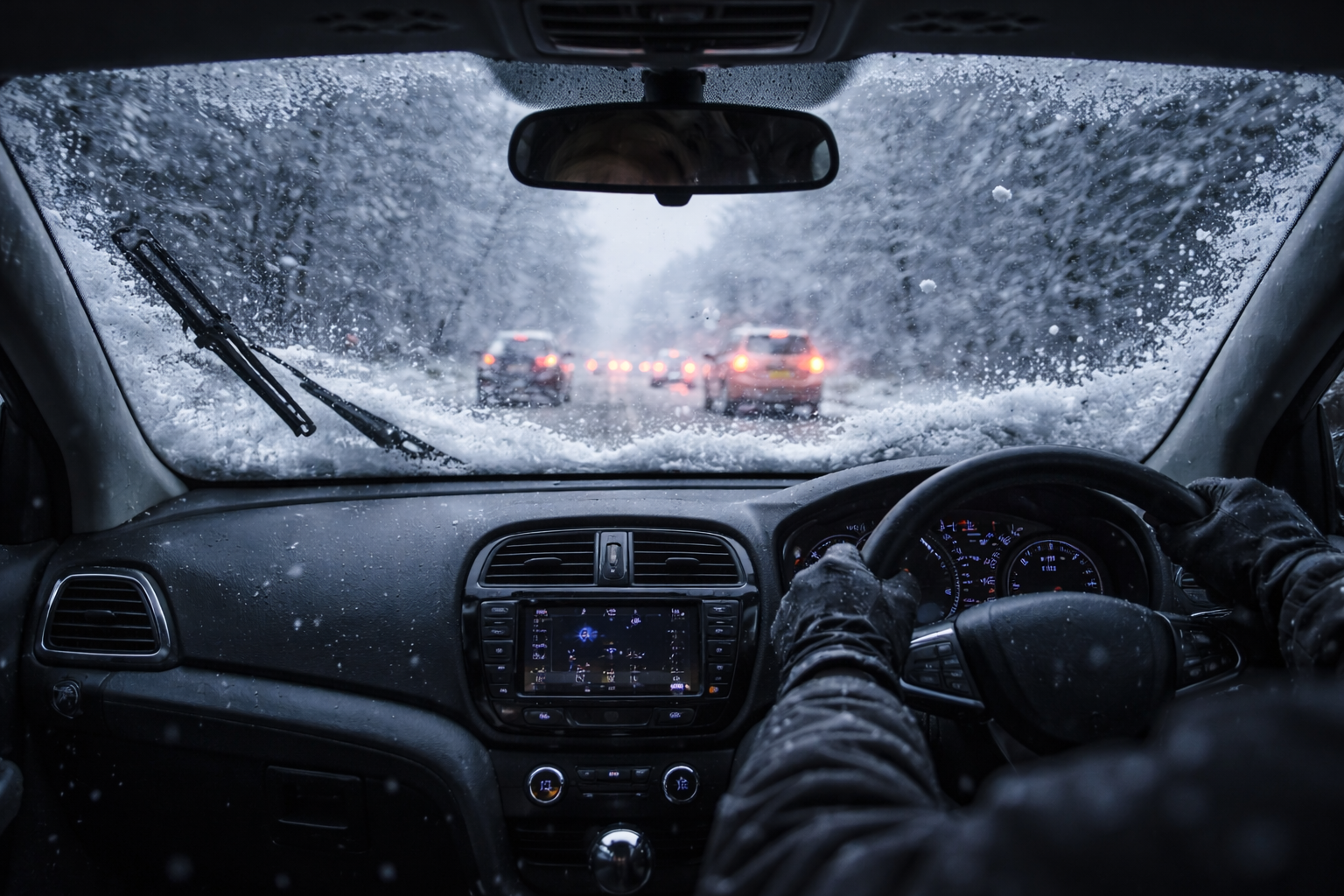
Freezing Weather on the Way...
As we move towards the end of January, it is easy to feel that winter is easing its grip.
However, historically, some of the most disruptive weather arrives late January and continues through February and even into March. Sudden cold snaps, overnight ice, heavy rain, strong winds and short bursts of snow are all common during this period. Roads are already tired after months of freezing and thawing, visibility is still poor for much of the day, and reaction times are often reduced by dark mornings and evenings. This is precisely the point in winter when complacency becomes risky.
Be Prepared
Good winter driving starts before the engine is switched on. Visibility and control are still the foundations of safe driving at this time of year. Windscreen washer fluid should contain proper screen wash (with a low temperature freezing point) rather than water, as frozen jets or a smeared windscreen can quickly turn a routine journey into a stressful one. Wiper blades that were just about coping in autumn may struggle with winter grime, while dirty headlights and number plates reduce visibility more than many drivers realise.
Tyres also deserve attention long after the first frost. Cold temperatures reduce tyre pressure naturally, and worn tread dramatically increases stopping distances on wet or icy roads. Even at low speeds, grip can be lost far more easily in winter conditions, particularly on untreated side roads and rural routes.
On the Road
Different types of winter weather bring different driving challenges, and adapting your approach matters more than confidence or experience.
In snow and icy conditions, gentle inputs are essential. Slow acceleration, careful steering and longer braking distances help maintain control. Black ice remains one of the biggest dangers because it is often invisible and can form even when temperatures feel mild, particularly on bridges, shaded roads and early mornings.
In heavy rain, the risk shifts to aquaplaning and reduced visibility. Standing water can build quickly, especially on damaged road surfaces. Lower speeds, smoother steering and increased following distances all reduce the chance of losing control.
In high winds, stability becomes the priority. Sudden gusts can push vehicles sideways, especially when overtaking lorries or driving on exposed roads. Extra care is needed near trees, debris and cyclists, who may be affected by the same conditions.
Preparation also means thinking about what happens if something goes wrong. A winter-ready vehicle should still carry a few simple items that make a real difference if you break down or get stuck. Warm clothing, a torch, a charged phone, de-icer and an ice scraper are small additions that can turn an uncomfortable wait into a manageable one. A blanket may sound old-fashioned, but it is surprisingly useful during cold delays.
The Peril of Potholes
One hazard that peaks towards the end of winter is pothole damage. Repeated freezing and thawing weakens road surfaces, and potholes often appear suddenly, hidden under puddles or poor light. Hitting one at speed can damage tyres, wheels, suspension or steering components in seconds. Repair costs can be significant, and claims are not always straightforward.
Pothole Cover
This is where insurance can help. When taking out a new policy or renewing an existing one with Performance Direct, pothole cover can be added within 14 days of purchase or renewal, helping to provide protection against unexpected repair costs caused by deteriorating winter roads.
Understanding what your policy does and does not cover before damage occurs is far easier than dealing with the consequences afterwards.
Winter may be edging forward, but it is far from finished. Staying alert, staying prepared and making sure your insurance reflects real winter risks can make all the difference as the season enters its final, and often most unpredictable, phase
Performance Direct is authorised and regulated by the Financial Conduct Authority. FCA registration number 307002. This article is for information purposes only and does not constitute advice or a personal recommendation.